
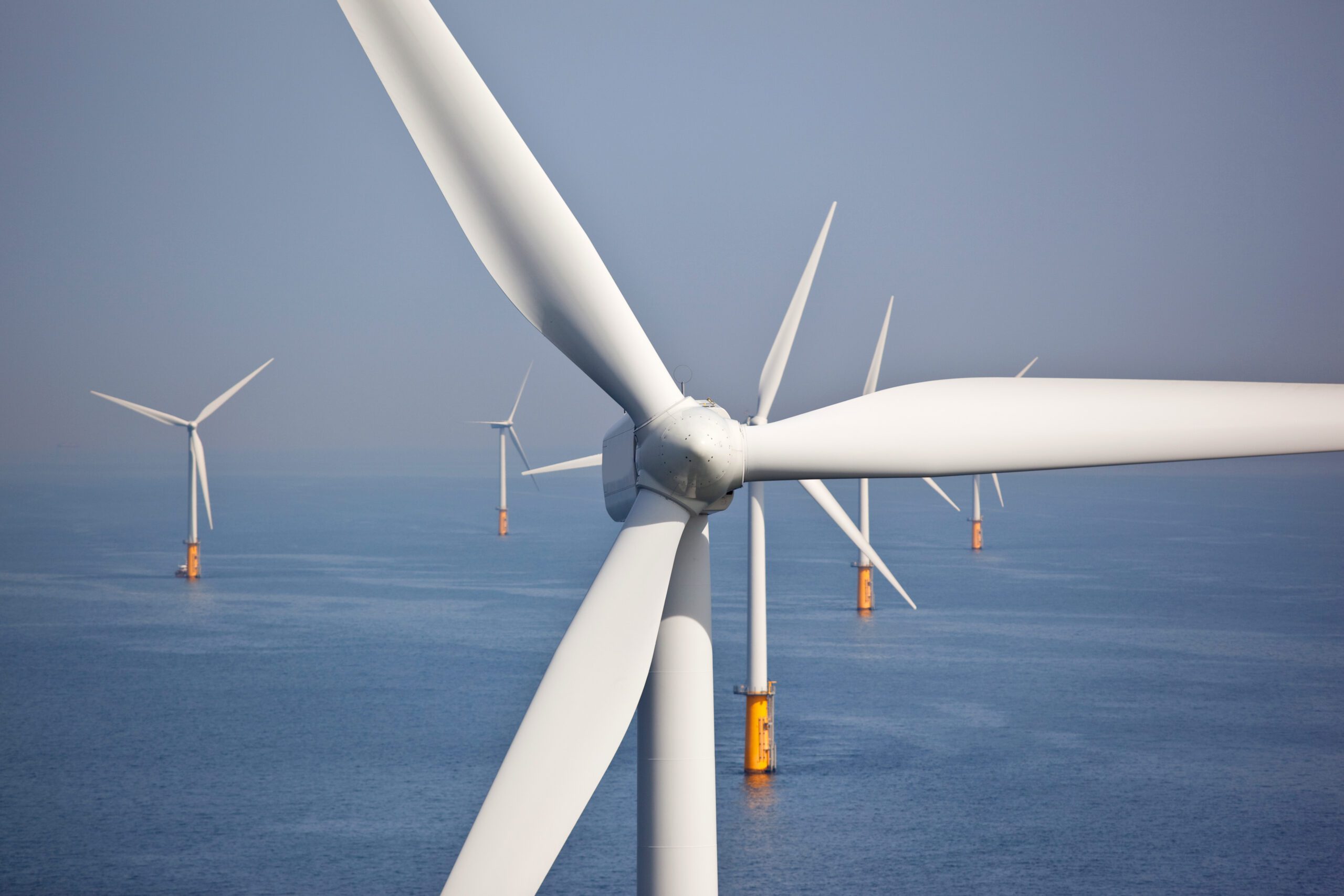
Wind
Risktec has considerable experience working within offshore and onshore wind industry, providing expert independent technical safety and environmental management consultancy, training and inspections amongst other services. We are actively engaged and leading the industry in meeting key health and safety and environmental management challenges through extensive collaboration with a range of clients throughout the supply chain, including Original Equipment Manufacturers (OEMs) and owner/operators. Our experience ranges from discrete studies on specific projects through to embedded root and branch safety and environmental assurance support.
Our experience
- Safety case and e-safety case development including:
– Fire Risk Assessment (FRA) and safety justification
– Escape Evacuation and Rescue Assessment (EERA)
– Logistics hazard identification and risk assessment - HSE Management System (HSE MS) support
- Risk management training
- Turbine construction risk assessment and support
- Asset integrity management, Management of Change (MoC), turbine inspections and life time extension
- Human Factors (HF) and ergonomics support
Our Experience
- Independent reviews / assessment of compliance with the Machinery Directive
- Industry best practice guidance development
- Fault Tree Analysis (FTA)
- Quantification of risk
- Consents and Environmental Advisory/Management support.
- EIA/ES chapter review and oversight
- Training and incident prevention and response
- Monitoring and reporting consent compliance
Safety Assurance
The key purpose of a safety assurance process is to deliver confidence in system safety throughout the system lifecycle, from concept development, through design, construction and operation, to end of life and decommissioning. Risktec’s tailored safety assurance process ensures that effort and resources are applied to the right areas at the right times, to ensure and demonstrate that the risks associated with the facility are reduced to As Low As Reasonably Practicable (ALARP).
Fire Risk Assessment (FRA)
Risktec has conducted FRAs for manufacturers, windfarm developers, owners and operators, for both onshore and offshore turbines.
The FRA seeks to demonstrate that the risk of fire is reduced to ALARP. This involves the identification of all credible fire sources, an assessment of all potential fire scenarios, modelling to determine how these scenarios could escalate and an assessment to determine whether personnel can escape from the turbine safely recognising all possible permutations of fire and personnel locations.
Risktec has also developed detailed product safety justifications for a number of turbine models, considering all identified significant/major accident hazards.
Wind Turbine Life Extension
Risktec can help you plan for and deliver different end-of-life scenarios for your wind farm, for example:
- Life extension
- Repowering
- Decommissioning
In order to determine if life extension of a wind turbine is feasible, we conduct analyses and physical inspections, identifying appropriate remedial work, re-inspection intervals and life extension potential.
Risktec provides a comprehensive life extension service to help you determine the condition of your assets and whether they can be safely and economically operated beyond their original design life. We tailor our approach to meet your needs and can deliver assessments that are compliant with a range of standards.
Our inspections and analysis can take all parts of your wind turbines into account, including the control and protection systems and all load transferring components.
Risk Management Training
Risktec are passionate about training and education. Our dedicated training business provides a unique training and education service, from single training courses and professional qualifications through to a tailored MSc programme which includes optional Clean Energy specific modules.
Furthermore, Risktec offer customised training solutions ranging from individual modules to multi-year development programmes.
Human Factors
Risktec is a Chartered Institute of Ergonomics and Human Factors Registered Consultancy with specialists who are experienced in providing a wide range of services to organisations within the wind industry. We offer pragmatic solutions to help customers ensure a fit-for-purpose design, safe and sufficient operations, and safety assurance and regulatory compliance. Example HF activities include:
- Production of HF Integration Plan (HFIP)
- HF and ergonomics design guidance review
- HF input to generator and module Operability Review
- HF input to HAZID studies
- HF input to boat landing review
- HF input to crew transfer vessel specification review
- HF review of turbine and module bowties

Functional Safety
Risktec has extensive experience in delivering functional safety services to a broad range of clients in a wide range of industrial sectors. Our consultants are familiar with a variety of functional safety studies, tools and techniques, including Failure Modes and Effects Analysis (FMEA) and Failure Modes, Effects and Criticality Analysis (FMECA).
Our FMEA/FMECA services include:
- Facilitating and recording FMEA/FMECA workshops
- Conducting standalone FMEA/FMECA studies
- Qualitative reviews describing the causes/consequences of failure
- Criticality reviews to determine the importance of each failure
- Quantitative reviews to derive Mean Time To Failure and Mean Time To Repair for input into a reliability/availability study
Safety Case and e-Safety Case
Risktec has extensive experience of developing safety cases for wind turbines and projects, incorporating all required safety studies.
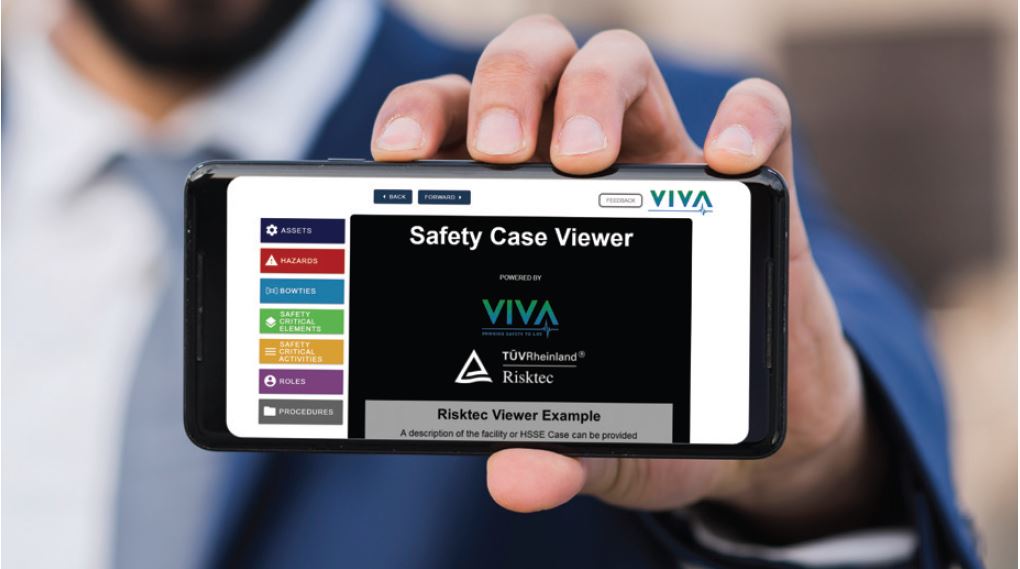
In addition, we have developed a bespoke platform for holding and sharing the information from the safety case, the Risktec Viewer e-safety case tool.
The e-safety case provides a simple, intuitive and more user-friendly tool than a traditional, lengthy, paper-based safety case. Its purpose and the information presented remains the same as a traditional safety case, but it is interactive, using clickable links as a means of connecting and navigating to related information.
Applying the Circular Economy to Offshore Wind
We provide circular economy support, where the aim is to keep materials in use for as long as possible, reducing the amount of resulting waste.
